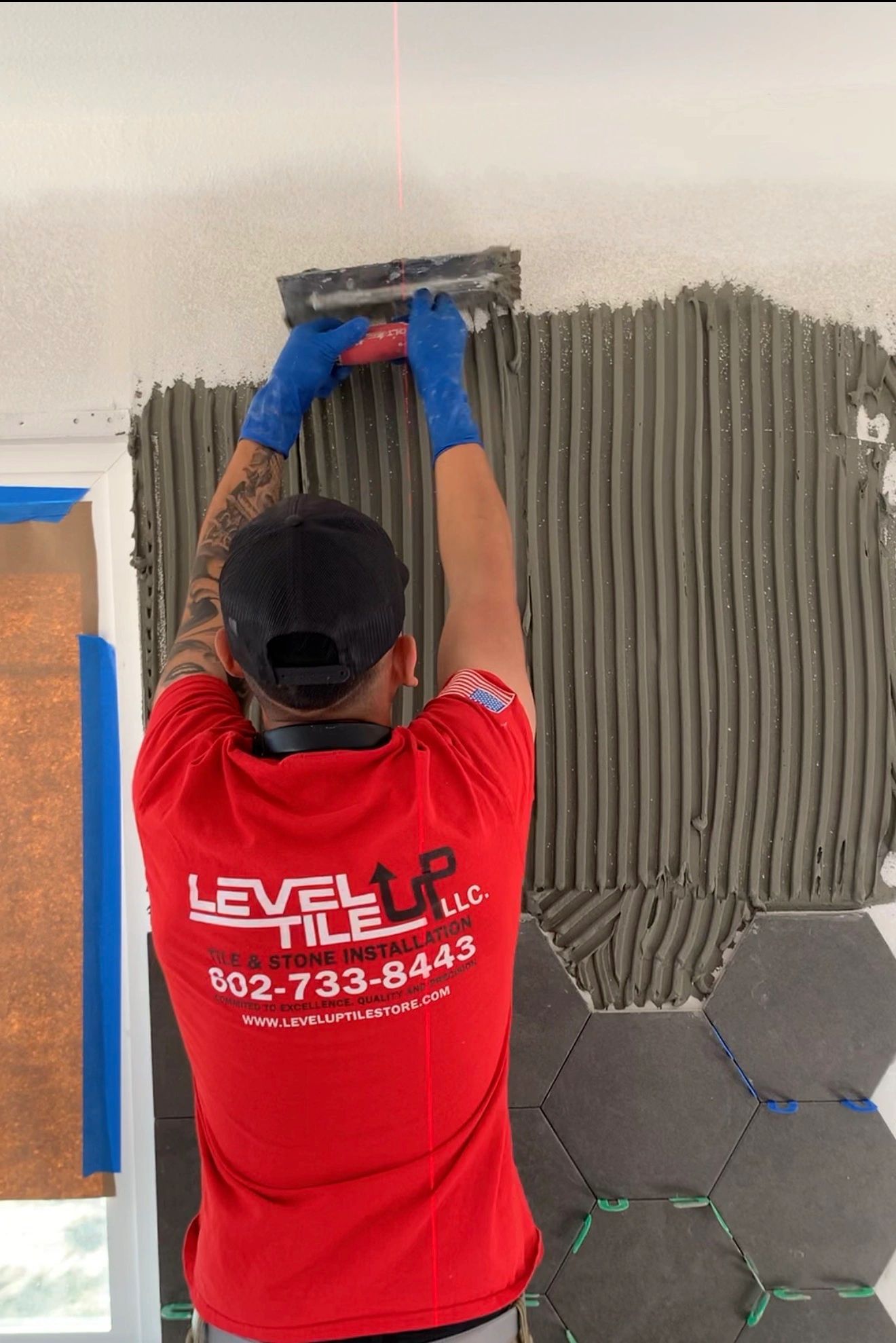
Waterproof Boards vs Cement Boards: What's Really Going on Behind Your Shower Tile
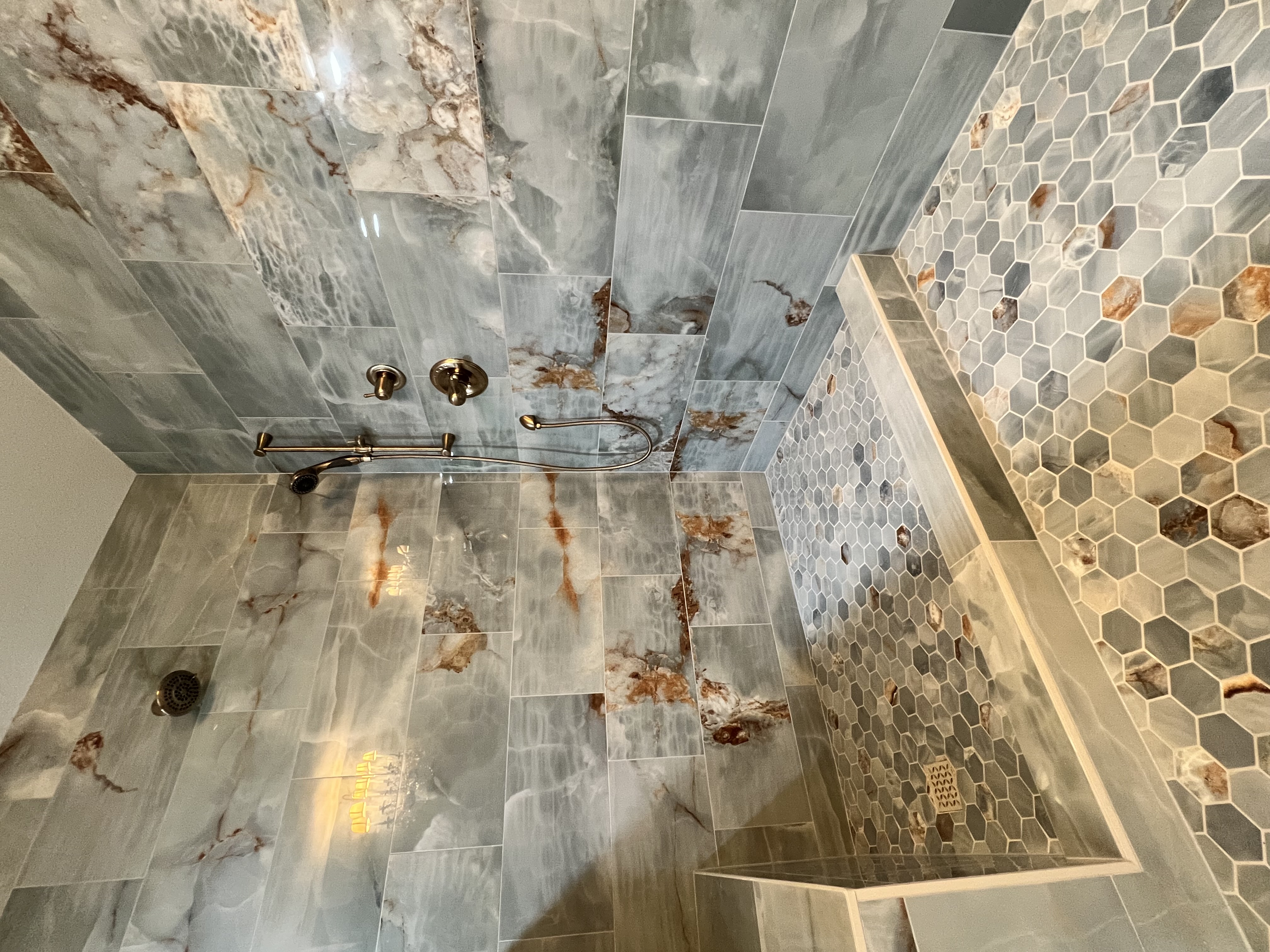
The Part of Your Shower You Will Never See (But Should Care About the Most)
Let me tell you something that might sting a little: the most important part of your entire shower remodel is something you will never look at once the job is done.
It is not the tile. It is not the grout color. It is not the rainfall showerhead you found on Pinterest at 1 AM. It is what is behind the tile -- the wall substrate that sits between your framing and the finished surface you see every morning.
Here is the thing. Most homeowners spend weeks agonizing over tile selection. They visit showrooms. They hold samples up to bathroom lighting. They text their friends pictures with captions like "which one -- the Calacatta or the Carrara?" Meanwhile, they have spent exactly zero minutes thinking about the material their tile is going to be stuck to. And that material? That is what determines whether your shower lasts five years or fifty.
This is where ninety percent of shower failures begin. Not at the tile. Not at the grout. Behind the tile, in the wall system that nobody thinks to ask about.
So today I am going to break down the two main options -- cement boards and waterproof foam boards -- and tell you everything your contractor probably will not. No sales pitch. No corporate fluff. Just the honest truth from someone who has torn out enough failed showers to know what actually matters.
What Are Cement Boards? (The Old School Approach)
Traditional backer boards have been the standard shower wall substrate for decades. If your house was built or remodeled anytime in the last thirty years, there is a strong chance your shower walls use some type of backer board. The big names are Durock, HardieBacker, and WonderBoard (cement-based), and DensShield (a gypsum-based board with a fiberglass mat face -- not technically a cement board, but often grouped with them).
Cement boards are panels made of cement, fiberglass mesh, and various fillers. They are rigid, they are durable, and they have worked well enough for a long time. But "well enough" comes with some important footnotes.
They are heavy. A standard 3x5 foot sheet of cement board weighs 30 to 40 pounds. That might not sound like a big deal until you are carrying six of them up a staircase into a second-floor bathroom. Or until your installer is holding one overhead to fasten it to a ceiling. Heavy means harder to handle, which means more fatigue, which means more room for sloppy installation.
They are miserable to cut. Cutting cement board generates silica dust. If you have never heard of silica dust, here is the short version: it is a serious health hazard. Prolonged exposure causes silicosis, a permanent lung disease. It is not a joke. Cutting cement board requires a respirator, and even then, that dust gets everywhere -- in the bathroom, in the hallway, in your HVAC system. Your house becomes a dust zone for the day.
And here is the big one that most homeowners do not know: cement boards are NOT waterproof.
Read that again. Cement boards are water-resistant, not waterproof. There is a massive difference. Water-resistant means they can handle some moisture exposure without falling apart immediately. Waterproof means water cannot penetrate them at all. Cement boards are the first one, not the second.
That means after you install cement board on your shower walls, you are not done. Not even close. You still need to:
- Tape every seam with mesh tape or fabric membrane
- Apply a liquid waterproofing membrane (like RedGard or Hydroban) over the entire surface
- Wait for that membrane to cure -- usually 24 hours or more
- Then you can finally start tiling
That is a lot of steps. And every single one of those steps is a place where something can go wrong. If the liquid membrane has thin spots, pinholes, or was not cured properly, water will find its way through. And it will. Water is unbelievably patient.
Now, DensShield deserves a separate mention. It is actually a gypsum-based board with a built-in moisture barrier on the face -- not a cement board at all. That moisture barrier makes it a step above standard cement board. But the seams still need liquid waterproofing, and the edges are still vulnerable. It is better than cement board, but it is still not a fully waterproof system by itself.
The bottom line with cement boards: they work, but they depend heavily on everything else being done perfectly on top of them. The board itself is not protecting your walls from water. The membrane is. And that membrane is only as good as the person who applied it.
What Are Waterproof Foam Boards? (The Modern System)
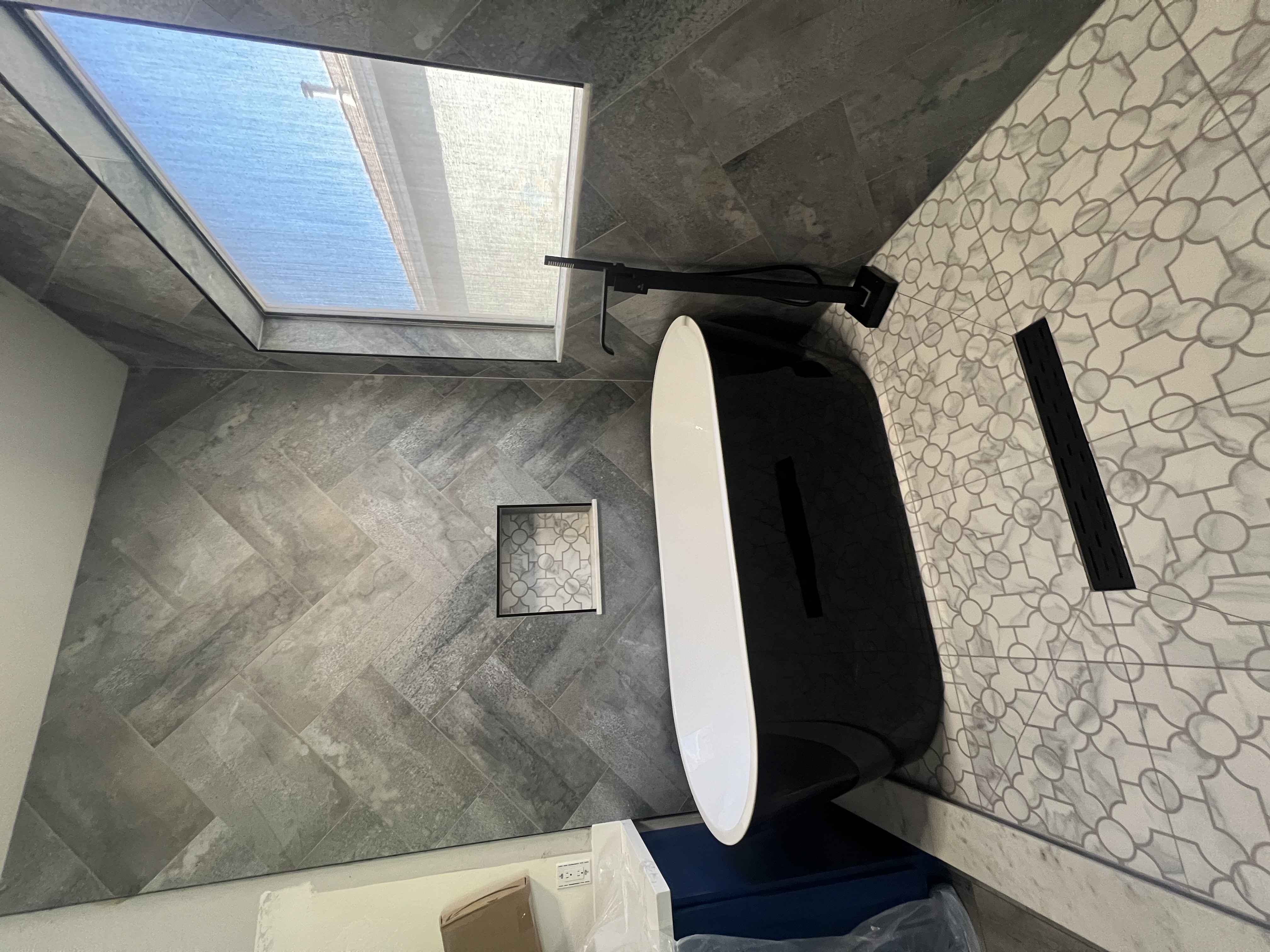
Waterproof foam boards are the newer generation of shower wall substrates, and in my professional opinion, they are a significant upgrade over cement board in almost every way. The major players are HydroBlok, GoBoard, Schluter Kerdi Board, and Wedi Board.
These panels are built around an XPS (extruded polystyrene) foam core -- the same type of insulation foam you see in high-performance building construction. But unlike raw insulation foam, these boards are engineered specifically for tile installation with reinforced surfaces designed to bond with thinset mortar.
They are lightweight. A foam board panel weighs a fraction of what cement board weighs. One person can carry and install them comfortably. That means less fatigue, better handling, and more precise installation. When your installer is not wrestling with a 40-pound panel overhead, they can focus on getting it right.
They cut clean. No power tools needed. No dust. You score a foam board with a utility knife and snap it. That is it. No silica dust floating through your house. No respirators. No cleaning dust out of your air vents for the next week. If you or anyone in your household has respiratory sensitivities, this alone is a game-changer.
They are 100% waterproof through the entire panel. This is the headline. Not water-resistant. Not water-resistant-with-a-coating-on-top. The XPS foam core has zero water absorption. If you cut a foam board in half and submerged it in a bathtub for a month, it would absorb essentially nothing. Water does not get through. Period.
That means the installation process is dramatically simpler:
- Install the board
- Seal the joints with polyurethane sealant or a sealing band
- Tile directly onto the board
No liquid membrane. No waiting for cure time. No wondering whether your waterproofing has thin spots. The board IS the waterproofing. Every square inch of it.
Foam boards are also non-organic materials, which means mold and mildew have nothing to feed on. They are compatible with steam showers per TCNA guidelines. And because they provide a small amount of insulation value, your shower walls will actually feel slightly warmer to the touch -- a minor perk, but a nice one.
Head-to-Head: Cement Board vs Waterproof Foam Board
| Category | Cement Board | Waterproof Foam Board |
|---|---|---|
| Weight | Heavy -- 30-40 lbs per 3x5 sheet | Lightweight -- easy one-person handling |
| Cutting | Dusty, silica hazard, requires power tools and respirator | Clean, score and snap with a utility knife, no dust |
| Waterproofing | Water-resistant only -- requires additional liquid or sheet membrane | 100% waterproof through the entire panel -- no additional membrane needed |
| Installation Steps | More steps: install, tape, membrane, cure, then tile | Fewer steps: install, seal joints, tile directly |
| Error Risk | Higher -- liquid membrane can have thin spots, pinholes, or incomplete coverage | Lower -- consistent waterproofing built in, less room for human error |
| Total Cost | Cheaper material, but add labor + membrane cost | Higher material cost, but less labor and no membrane cost |
| Indoor Air Quality | Silica dust during cutting is a health hazard | No dust -- clean cutting environment |
| TCNA Compliance | Meets standards when installed correctly with proper waterproofing | Meets standards when installed correctly |
So Why Do Most Contractors Still Use Cement Board?
This is the question I get asked every time I explain the difference to a homeowner. If foam boards are better in almost every measurable way, why does it seem like every other contractor is still reaching for cement board?
A few honest reasons:
It is cheaper upfront. Cement board costs less per sheet than foam board. For a contractor running tight margins or trying to win a bid on price alone, that material savings adds up. Of course, when you factor in the cost of the liquid membrane, the extra labor to apply it, and the cure time that extends the project schedule -- the total cost gap shrinks significantly. But on the quote, it looks cheaper. And quotes win jobs.
It is what they learned. Most tile contractors learned on cement board. Their mentor used cement board. Their mentor's mentor used cement board. When you have done something one way for twenty years and it has "worked fine," there is a natural resistance to change. That does not make it wrong. But it does not make it the best option either.
They do not want to invest in learning new systems. Switching to foam boards means learning new fastening patterns, new sealing techniques, and new manufacturer guidelines. Some contractors would rather stick with what they know than spend time and money learning a new system -- even if that system produces a better result for the homeowner.
Some genuinely do not know foam boards exist. The tile industry moves slower than you might think. There are plenty of contractors out there who have never heard of HydroBlok or GoBoard. They are not bad people. They are just behind on what is available.
I want to be fair here. Not all cement board installations are bad. When done correctly -- with proper waterproofing, thorough membrane coverage, adequate cure time, and sealed seams -- cement board works fine. Millions of showers are standing proof of that. The problem is not the material itself. The problem is the margin for error. More steps means more opportunities to get something wrong. And in a shower, getting something wrong means water damage, mold, and a very expensive repair bill down the road.
There is a saying in construction that I think about a lot: "We've always done it this way" is the most expensive sentence in the industry. It is the sentence that keeps contractors using methods that work okay when better options are sitting right there on the shelf.
What Level Up Tile Uses (and Why)
We are not religious about any single brand. We are religious about results. Here is what we use and why:
HydroBlok foam boards on all shower walls. This is our go-to. The panels are excellent quality, fully waterproof, lightweight, and tile-ready out of the box. They have become the backbone of our shower wall system and we have had zero waterproofing failures with them.
GoBoard where needed. Another excellent foam board option. We use it in specific applications where the panel dimensions or thickness work better for the layout.
DensShield in specific applications where appropriate. We are not anti-cement board. There are situations -- certain non-shower applications, specific framing conditions -- where DensShield is the right call. We use it when it makes sense. We just do not default to it for shower walls when a better option exists.
Schluter Kerdi membrane on all shower pans. The floor is a different animal than the walls. For shower floors, we use Schluter Kerdi membrane with a FloFX drain -- a proven system that has been tested and refined specifically for shower pan waterproofing. Different system for a different purpose.
We have tested multiple systems over the years. We have ripped out other contractors' work and seen what fails and what holds up. The systems we use are the ones we trust -- not because a sales rep told us they were great, but because we have seen them perform in the real world.
One more thing: we run HEPA air filtration on every single job regardless of what materials we are using. That is just how we operate. But using foam boards means even less dust to begin with. Your house stays cleaner, your air stays cleaner, and you are not finding construction dust on your kitchen counters three days later.
What to Ask Your Contractor
Whether you hire us or someone else, these are the questions you should be asking before any shower work begins. The answers will tell you a lot about who you are dealing with:
- "What wall system are you using in my shower?" -- A professional should have a specific answer with a product name. If the answer is vague -- "backer board" or "the usual stuff" -- dig deeper.
- "Is that waterproof or water-resistant?" -- This is the question that separates contractors who understand the difference from those who do not. If they look confused or say "same thing," that tells you everything.
- "Do you need to add a membrane on top?" -- If they are using cement board, the answer should be yes, and they should be able to tell you which membrane and how they apply it. If they say no membrane is needed on cement board, stop the conversation.
- "How do you handle the seams?" -- Every system has seams. The question is how those seams are sealed. Whether it is mesh tape with liquid membrane or polyurethane sealant with a sealing band, your contractor should have a clear, confident answer.
If they say "cement board" and cannot clearly explain what waterproofing membrane goes on top and how they verify full coverage -- that is your sign to keep looking.
Want a Shower Built With the Right System From Day One?
Get a free, no-pressure consultation. We will walk you through exactly what goes behind your tile -- and why it matters for the life of your shower.